
Brand Engineering: How to Be Bold Without Betting the Business
by Liam O'Dowd in
6 min read
Designers are taking fewer risks with brand updates. In today's hyper-online world, the fear is understandable, and the risks are real, but there is a way to engineer rebrand success without compromising on ambition.
Is design becoming too safe? It’s a question that surfaces year after year in creative circles. From tech giants to global fast food chains, businesses are opting for minor tweaks to branding or harking back to tried and tested logos. Even luxury fashion brands have been accused of opting for identities that all look too similar. The pattern is consistent. Brands are playing it safe, but less attention is given to why the retreat is so deep – and what can actually be done about it.
Across the globe, we’re watching this retreat happen in real time. Bold rebrands are quietly abandoned or, worse, thrust into the open only to hit a wall of online backlash. Whether it's an almost imperceptible tweak or a brave leap that ends in disaster, creatives find themselves trapped between safety and risk, while brand owners are left terrified because they lack a reliable way to validate an update before it goes live.
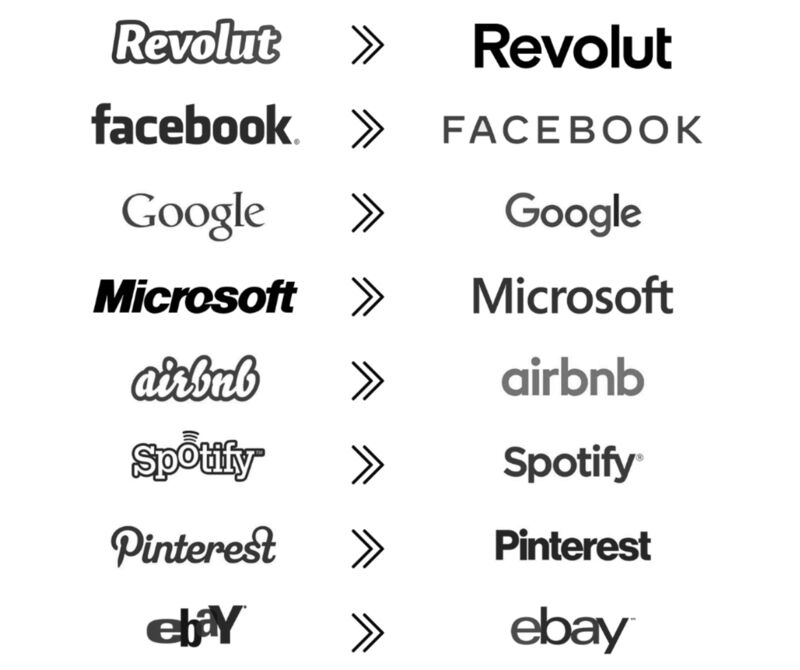
The rise of the san serif logo
The impact of rebrand mistakes is now so severe that the horror stories have become canon. But this isn’t just about aesthetics and online reactions, it’s about money – serious money.
Established brands sit on hundreds of millions of dollars, sometimes billions, in accumulated brand equity. Brand equity is estimated to represent more than 30% of the stock market value of S&P 500 companies, with three-fifths of CEOs believing corporate brand and reputation account for over 40% of their market capitalisation. For a global CPG brand with a market cap of $50 billion, that's $15–20 billion in value directly attributable to how consumers perceive and connect with the brand.
This is what decades of investment, consistency, and cultural positioning have built. A rebrand doesn't just redesign a logo. It puts that entire investment at risk.
When Cracker Barrel attempted to modernise its 1970s-era branding, removing the beloved "Uncle Herschel" figure that had appeared on the logo since 1977, social media erupted. The company's stock dropped 7.2% in a single day, shedding $94 million in market value. Within days, cumulative losses exceeded $143 million. The backlash was so fierce that the company scrapped the new logo entirely within a week, publicly conceding it "could've done a better job sharing who we are."
Jaguar’s bold rebrand – featuring neon-pink visuals, avant-garde models, and a promotional video that showed no cars – sparked a reaction so intense that it reportedly prompted an overhaul of its creative leadership. Gerry McGovern, the 69-year-old design chief responsible for the rebrand, was reportedly dismissed after 21 years with the company, though Jaguar has disputed the characterisation of events. Either way, the fallout was significant: dealers questioned whether to stay with the brand, public sentiment turned hostile, and what was intended as a bold reinvention became a cautionary tale.
With every rebrand disaster, the same lesson reinforces itself. Creative risk has become business risk, and the consequences are measured in nine-figure market cap swings.
Safety Isn’t The Answer
The practical realities of modern brand deployment partly drive the shift to minimalism and visual simplification. A logo now needs to perform across Instagram stories, Apple Watch apps, LinkedIn headers, TikTok watermarks, and favicon icons – some as small as 16x16 pixels. When a visual identity needs to maintain recognition at that scale, a clean sans-serif wordmark becomes the safe bet.
But safety has its own cost. When every brand converges on the same minimal aesthetic, distinctiveness erodes. And distinctiveness is the engine of brand equity. Without it, the years of investment that built the brand's value start to depreciate.
The Real Problem: Evolution vs Revolution
Not every brand update should be a revolution. In fact, most shouldn't be.
When brands have spent decades building recognition, mental availability, and emotional associations, shifting too far from what consumers know can damage attribution. The automatic link between the visual cue and the brand in a consumer's mind. A logo that no longer triggers recognition fails at its most basic function, regardless of how sophisticated its design language might be.
This is why many of the most effective brand updates are evolutionary. They modernise the visual system while retaining the core cues that consumers use to identify the brand. These updates protect the brand equity investment while allowing the identity to stay culturally relevant and technically fit for modern media environments.
But sometimes evolution isn't enough.
Sometimes the brand's strategic challenge is so significant – declining relevance, perception problems, failure to connect with new audiences – that the identity needs a fundamental rethink. A revolution. This is where things get dangerous. Because the bigger the leap, the higher the stakes, and the greater the risk of a Cracker Barrel or Jaguar scenario.
The Missing Discipline: Brand Engineering
The traditional rebrand process hasn't changed much in decades: focus groups, internal debates, creative instinct, a healthy dose of fear, and a few quietly muttered prayers. If it works, it’s considered genius. If it fails, heads roll.
This model made sense when brands had time to test, fewer touchpoints, and more forgiving audiences. It doesn't make sense now. Social media amplifies missteps instantly. A new logo risks becoming a culture war. Removing a beloved character becomes ammunition for boycotts. Every creative decision is vulnerable to weaponisation.
The problem isn’t that bold design is too risky. It’s that brands don’t validate those creative decisions with real consumer data before they go live.
"The design industry doesn't have a bravery problem. It has a validation problem."
What if rebrands were treated with the same operational rigour that engineers apply to complex systems? Logos and designs already go through thorough UX testing to make sure they work across devices. What would happen if creative teams also tested, iterated, and optimised the emotional and perceptual performance of brand identities at every step of the process?
Enter brand engineering.
Safe brand design plays it safe from the start, constraining the creative ambition to avoid risk.
Engineered brand design validates the risk of going bold, using consumer data to understand exactly how far you can push, without going too far.
The distinction matters. Testing isn't about committee consensus or finding the safest middle ground. It's about having the evidence to defend adventurous choices. It's the difference between "we think this might upset people" and "we tested this with customers, here's exactly why it works."
When the Stakes Are High, Engineering Matters Most
If the objective is evolutionary, a careful modernisation that retains core brand cues, consumer testing confirms whether the update holds attribution and avoids unintended perception shifts.
But when the objective is revolutionary: a fundamental rethink of the brand's visual identity and positioning, a tool like Loops becomes even more critical. A step-by-step process of brand engineering lets you push creative boundaries iteratively, measuring brand KPIs at every stage to see precisely how far you can go without eroding equity or triggering backlash.
Rather than a single high-stakes reveal, the process works through multiple feedback loops: benchmark the brand's current performance, test early creative territories against real consumers, iterate based on data, and validate final outputs before launch. Each loop builds confidence. Each loop reduces risk.
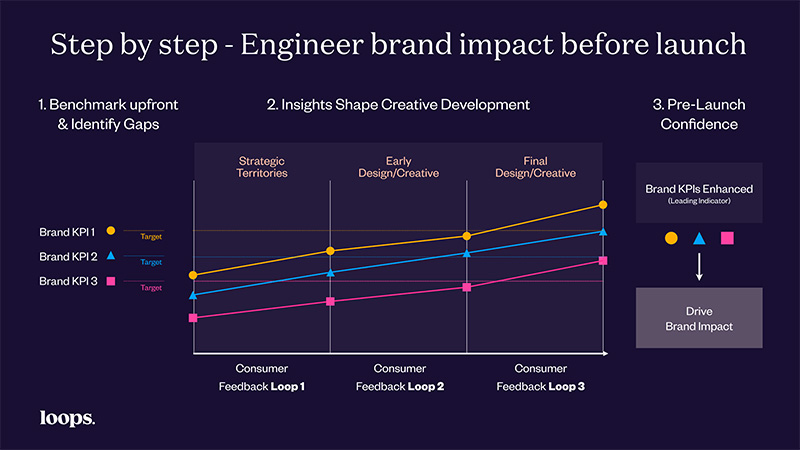
Brand engineering in Loops
If Cracker Barrel had taken this approach, they could have tested the removal of Uncle Herschel against multiple audience segments – loyal core customers, lapsed visitors, and younger demographics – before committing. They could have measured precisely which elements drove negative sentiment (the character removal? the colour shift? the typography?) and which created fresh appeal. Instead of a $143 million reversal, they could have found the intersection of heritage and modernity before the market punished them for not finding it.
If Jaguar had engineered their rebrand before launching, they could have tested the neon pink palette, the avant-garde positioning, and the car-free messaging against current owners, prospective buyers, and the broader public. The data would have revealed exactly where the identity resonated and where it disconnected. They could have iterated – adjusting heritage cues, recalibrating the visual language – and then made a deliberate, informed choice about how far to push. The backlash could have been anticipated, mitigated, and even leveraged, rather than stumbled into blindly.
The RSPCA – 200 Years of Heritage, Engineered for Revolution
The RSPCA is one of the most recognised brands in the UK, with 96% awareness. Founded in 1824, it hadn't rebranded since the 1970s, and research showed the brand was actively holding it back. Consumers perceived the charity as cold and authoritarian. It wasn't connecting with younger audiences. Donation consideration was declining.
This wasn't a situation where evolution would suffice. The RSPCA needed a revolution.
Working with branding agency Jones Knowles Ritchie (JKR), the charity embarked on a comprehensive identity overhaul: a new logotype freed from its iconic octagon, a vibrant new colour palette, bespoke typography inspired by protest placards, and a flexible system of animal illustrations that could be customised by each of the RSPCA's 140 branches.
It was radical. And it was revolutionary. But it wasn't a gamble.
Throughout the process, JKR used Loops as their consumer testing partner. The platform was embedded at every stage of creative development, not as a final gate at the end, but as a live feedback loop from the first strategic territories through to final design execution. Purpose statements, design routes, and visual concepts were tested with thousands of individuals, including RSPCA staff, existing supporters, and the general public.
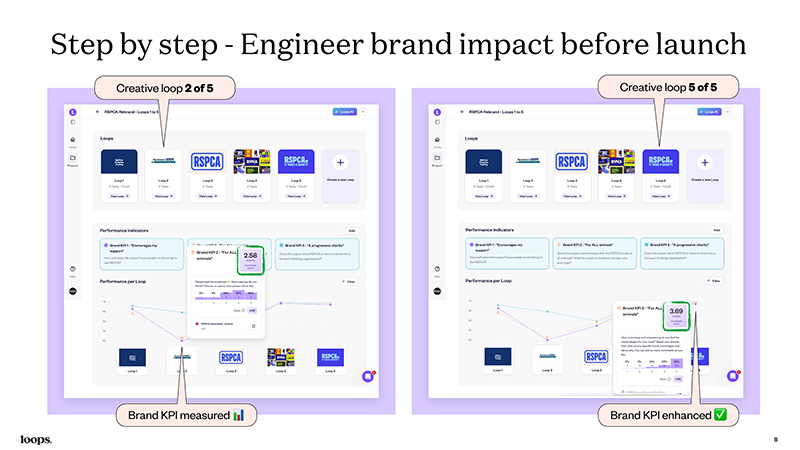
Brand Engineering for the RSPCA
The approach mirrors the brand engineering process: benchmark current brand KPIs, run iterative consumer feedback loops during creative development, and validate final outputs against performance targets before launch. Each loop provided specific, actionable data that shaped the next creative iteration, strengthening what resonated, refining what didn't, and building internal confidence across a 200-year-old organisation with deeply invested stakeholders.
The results speak for themselves.
The RSPCA's rebrand launched to overwhelmingly positive acclaim. It won Gold at the 2024 Brand Impact Awards and the prestigious Best of Show: Identity award. The launch generated 4.5 billion media impressions across 163 articles. Website traffic jumped 20% immediately. And critically, consideration to donate, the commercial metric that matters most, is up.
As Christopher Sharpe, creative director at JKR, said, Loops allowed the team to "stress-test routes and ideas sooner rather than later, using research not as a final hurdle but as a tool to constantly drive development forward."
This is what brand engineering looks like in practice: a 200-year-old institution that delivered a genuine revolution. Bold, distinctive, and fundamentally different from what came before, without any of the chaos, backlash, or value destruction that has become the default expectation.
The Approach Modern Brand Design Teams Need
A recent Creative Bloq article was the latest in a long line to ask the question if Design Is Too Safe?
It ended with a warning: "tread carefully, there are landmines in the market." Framing design choices as fear does nothing to help creatives navigate a challenging landscape. The design industry doesn't have a bravery problem. It has a validation problem.
Creatives want to do bold work. Brand owners want distinctive identities. But without a reliable way to test creative decisions against real consumers in real time, the rational choice is to play it safe, and the entire industry converges on the same cautious middle ground.
Brand engineering breaks this cycle. It replaces guesswork with evidence. It replaces months-long subjective debates with rapid iterative feedback loops. And it gives creative teams something they've never reliably had: the confidence to present ambitious work, backed by data that proves it will land.
Testing creative ideas isn't defensive. It's an attack on the constraints designers have to work within. It's how you get permission from your audience to be bold without fear. It's stepping carefully over the landmines because you already know where they lie.
The brands that will define the next decade won't be the ones that played it safest. They'll be the ones that were bold and rigorous. That took creative leaps and engineered the landing.
That's the discipline. That's brand engineering.