
Can Prediction Markets Act As A Bellwether For Brands?
by Liam O'Dowd in
7 min read
Once considered outliers, prediction markets are on the rise. These platforms – that allow anyone to wager on future outcomes – don’t precisely predict the future, but they tell you what people really think. While traditional trend reports look at what consumers did last quarter, prediction markets can help brands see what might be coming next.
All Bets Are On
Prediction markets are suddenly everywhere. Part bookies, part stockbrokers – in simple terms, they allow anyone to bet on future events. From election results to crypto peaks, platforms like Polymarket and Kalshi allow users to trade in contracts where the price acts as a probability indicator. Right now, Polymarket’s punters predict there is a 4.5% chance Jesus will return before 2027.
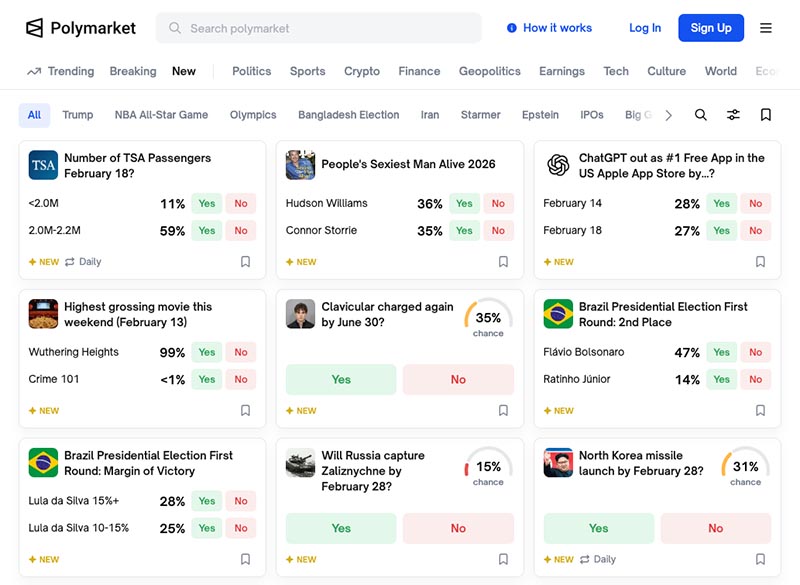
Some of the markets available on Polymarket
While each platform might carry some fanciful forecasts, they tackle the serious stuff too, and the results can be laser-focused. One study found that when predicting the outcome of the 2024 US elections, prediction markets were more accurate than all of the official polls, performing especially well when information was scattered and evolving.
When you give people a platform to predict the future, real-time, cultural and societal shifts can influence how the answers trend. Add in financial jeopardy, and it’s clear to see why many analysts are paying attention to what people are betting on.
Prediction markets are “the most effective way to aggregate information and the crowd wisdom,” according to Kalshi co-founder Tarek Mansour. “People don’t lie when money’s involved. You want to be right about your predictions so you don’t lose money.”
The concept isn’t new. People have been waging bets and trading contracts for difference for centuries, but the public interest in prediction markets is a recent phenomenon. Google Trends data shows that search volumes only really started to take off halfway through 2025, even traditional financial institutions like Goldman Sachs are looking at them with serious intent. But what does this have to do with brands?
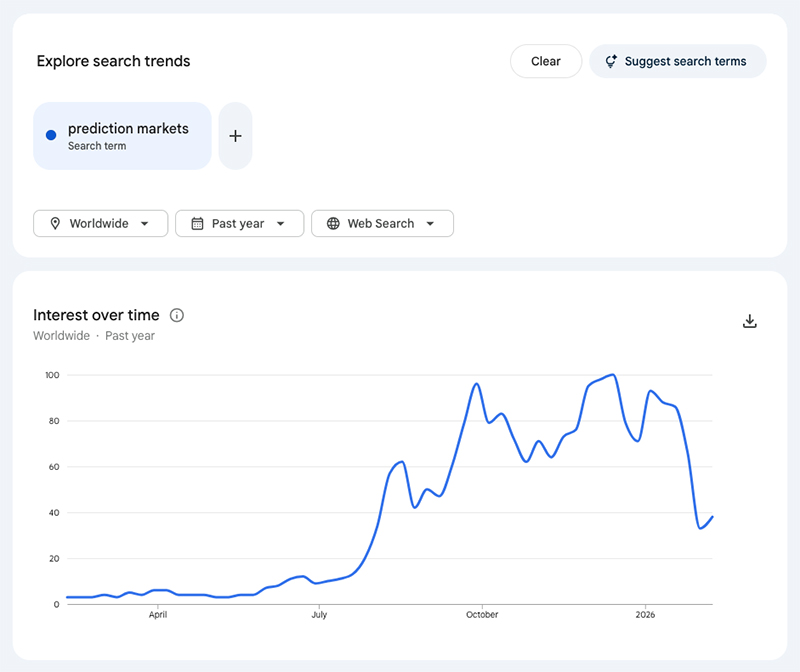
The rise in search volume for Prediction Markets
Real Time Trends
For decades, brand strategy has been influenced by retrospective data. Reports analyse consumer behaviour after it’s happened, looking in the rearview mirror to see what might be around the corner. Trends are forecasts months in advance, hedged carefully to make sure they aren’t wildly inaccurate.
Prediction markets are more forward-facing. They’re a bellwether of what people are really thinking, aggregating live sentiment as an immediate reaction to global, local and cultural shifts. Free of spin or bias, they are offering new insight into trends as they are formed, revealing uncertainties and sentiments early, before they become meta.
“People don’t lie when money’s involved. You want to be right about your predictions so you don’t lose money.”
It’s here that the advantage lies. Models and reports predict what should happen based on the past. Prediction markets tell you what people actually think will happen in real time. That financial edge is a true bellwether of real gut instinct. It allows brands to ask an important question. If people aren’t willing bet hard-earned cash on a trend, is it wise to bet your next creative move on it?
When The Game Gets Played
As always, there is a caveat – prediction markets aren’t a rigorous source of data on their own. They can easily be manipulated. In early 2024, traders on Polymarket began betting on which specific words Coinbase's CEO Brian Armstrong would say during an earnings call – a tech bro version of Grand Designs Bingo.
A bemused Armstrong was well aware of the market and decided to raise the stakes, reading out a list of crypto buzzwords at the end of the call. Bitcoin. Ethereum. Staking. Web3. There was no indication that Armstrong had wagered on this. When asked later about his role in the betting, he simply said, “The conference call was me just having a little bit of fun”.
Manipulation also comes in more sinister forms. In the hours before President Donald Trump announced that the Venezuelan leader had been seized, wagers on his impending doom rose. One account made more than $436,000 (£322,000) from a $32,537 bet. One expert said it had "all the hallmarks of a trade based on inside information."
Despite the vulnerabilities, these markets can still offer an additional layer of truth and insight that even the sagest report or forecast can’t foresee. Fashion, music, film, tech and climate markets can all lend insights into what people really think about the future, revealing clues on where to take a campaign. If odds are high and stable, it’s a strong indicator that a trend is rising. If odds are low or falling, then it might be time to rethink that strategic gamble.
As prediction markets continue to evolve, their role as real-time barometers for consumer sentiment will likely expand, bridging the gap between forecast-driven moves and intuition. They can’t replace forecasts, reports and proper creative testing, but they can add human-driven signals that steer brands onto the right course. Just make sure you validate those signals with real consumers first.